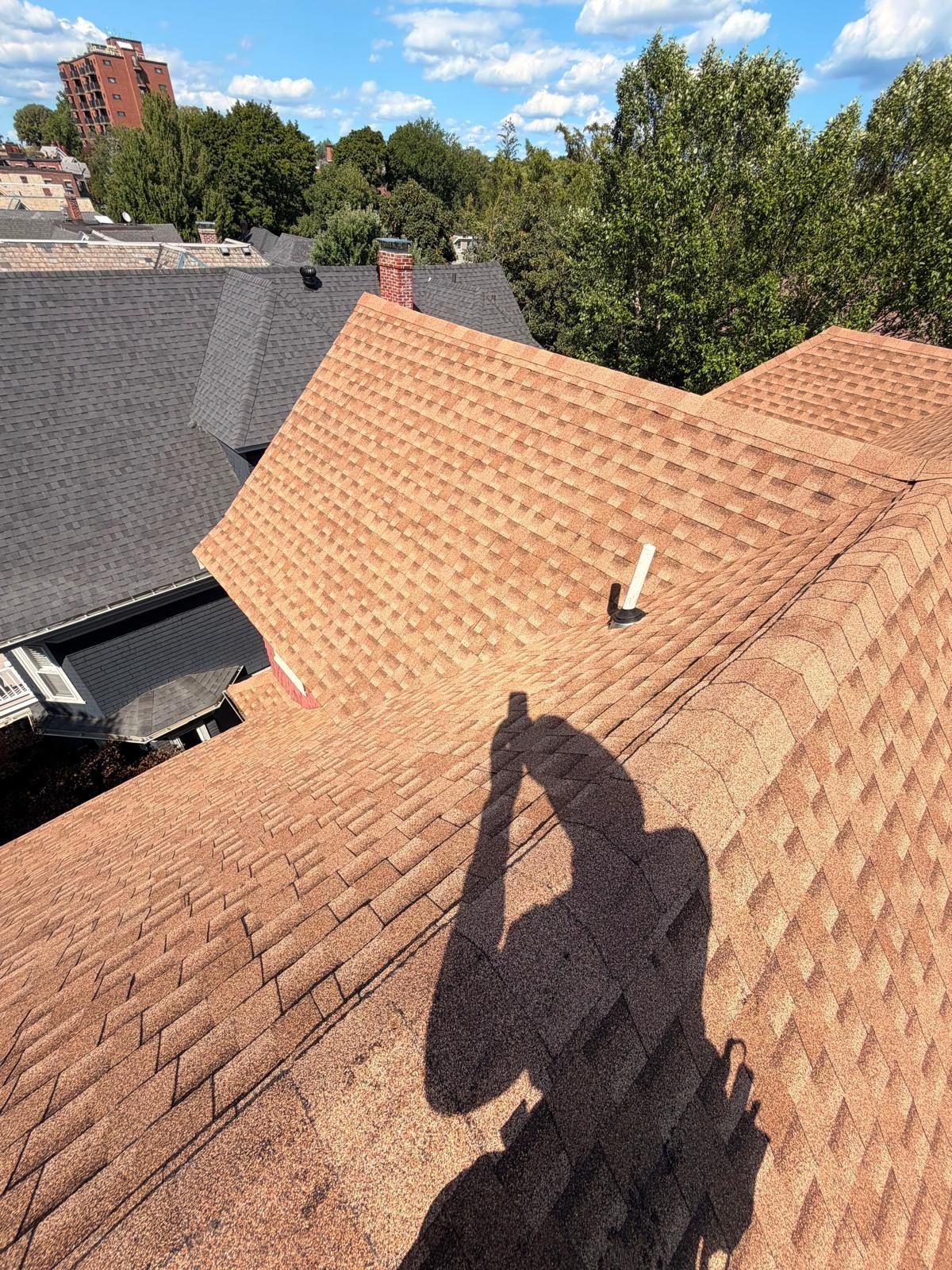
The housing stock here tells the story plainly. Most of Shrewsbury was built between the 1970s and 1990s, insulated to a standard that predates today's energy code. Heat escaping through a poorly sealed, under-insulated attic warms the roof deck, melts the snow above, and sends that water sliding down to the cold eave where it refreezes into a dam. The dam backs water under the shingles and into wall cavities. By the time a ceiling stain appears, the damage is already weeks old.
Homeowners across Shrewsbury's Colonial Revivals, raised ranches, and Cape Cods are the primary people we work with, along with property managers and rental owners. The entry point is usually a leak, thick eave ice, or water staining after a thaw, but the scope almost always involves the attic once we inspect the deck and insulation together. A registered contractor who pulls the required permits under 780 CMR and understands how attic air sealing, insulation depth, and ventilation ratio interact to keep a roof deck cold is not a commodity. That is the work.
The Scope of the Work
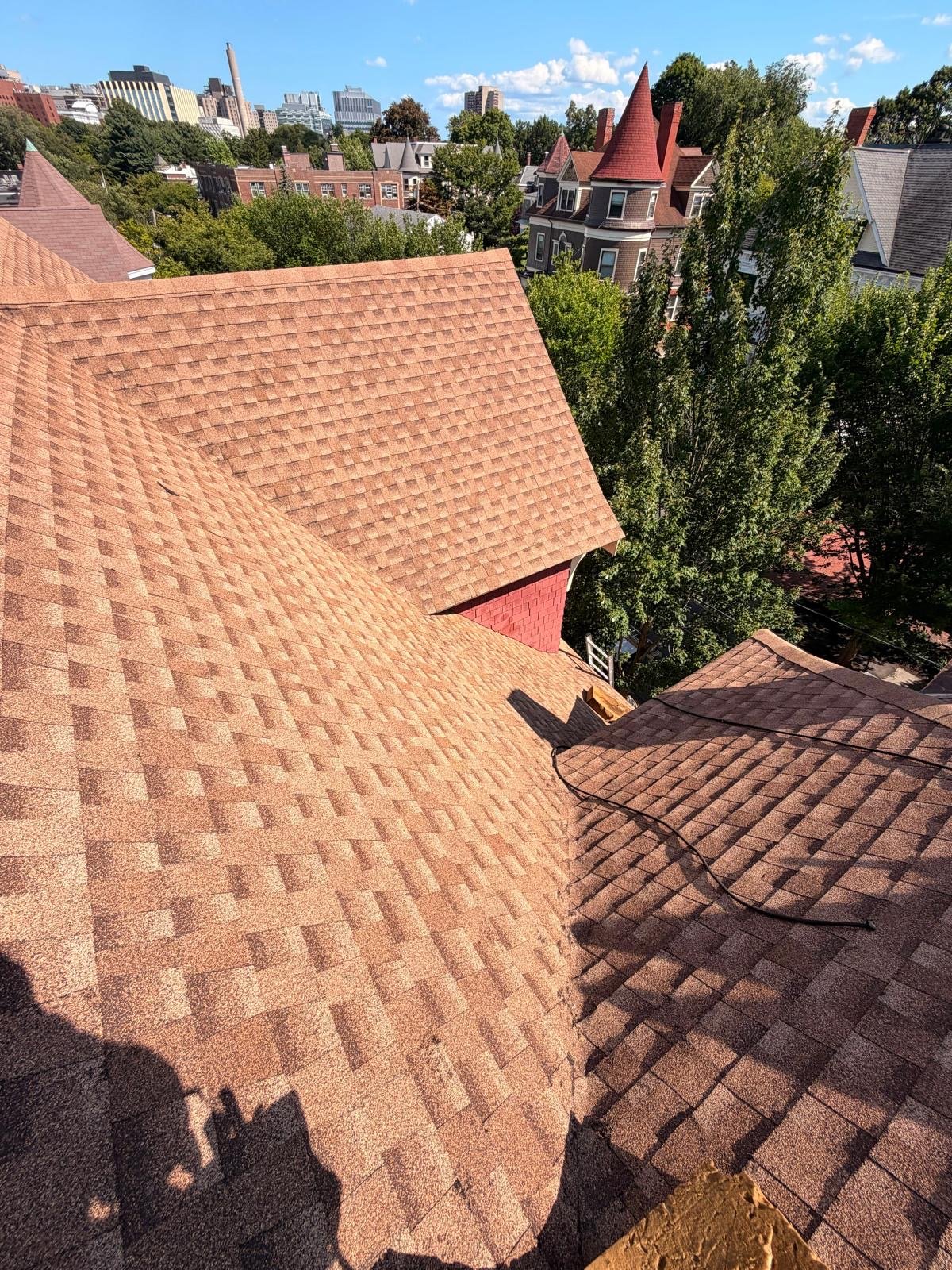
Attic air sealing, insulation upgrade to R-49 or higher, soffit-to-ridge ventilation correction, ice-and-water-shield membrane at eaves and valleys, and targeted heat cable installation along eaves, gutters, and downspouts.


 Core Prevention