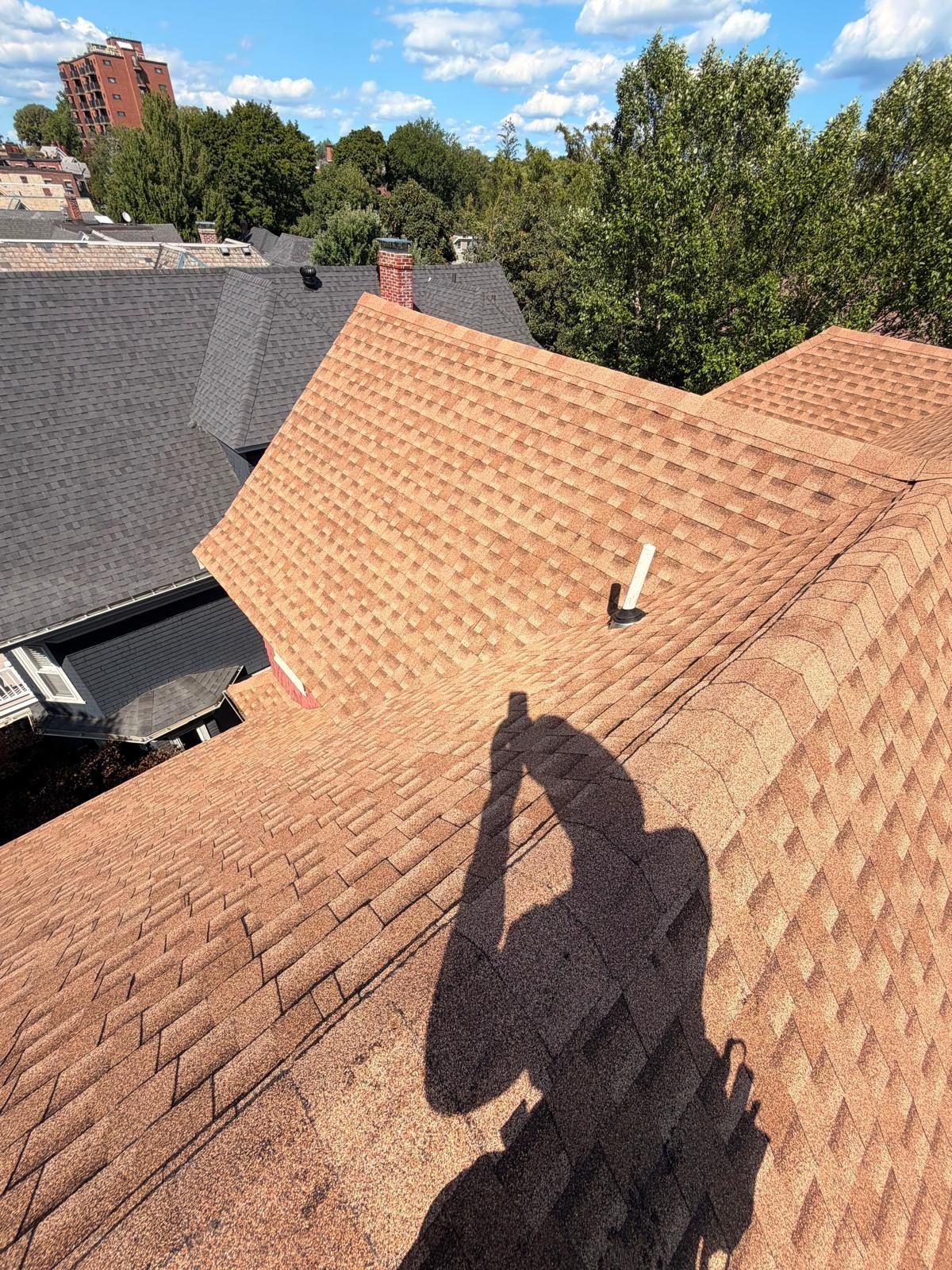
Low-slope roofs do not shed water the way a pitched roof does. They hold it, drain it slowly, and depend entirely on a continuous membrane to keep water out. When that membrane fails at a seam, a penetration, or a flashing edge, the water does not stay where it entered. It tracks along the insulation and decking until it finds a ceiling, a wall cavity, or a structural member, and by then the original leak point can be yards away from the visible damage inside.
Shrewsbury's freeze-thaw winters are particularly hard on flat roof seams. Water that pools and refreezes in a low spot works open every weak lap over successive seasons. The older housing stock in town, ranches with flat-roofed additions, detached garages, and porch dormers, carries membranes that were installed before current splice and flashing standards and have been working against Worcester County weather ever since. A repair addresses the failed area and the sound material immediately around it. A roof that has failed across the entire surface needs replacement, and we will tell you that plainly at the estimate rather than selling patches on a surface that has no remaining service life.
The Scope of the Work
Membrane patch and spot repair, seam and flashing repair, section replacement with moisture-mapped repair boundaries, leak diagnosis, re-flashing of drains and penetrations, and debris cleanup on EPDM, TPO, PVC, and modified bitumen roofs.


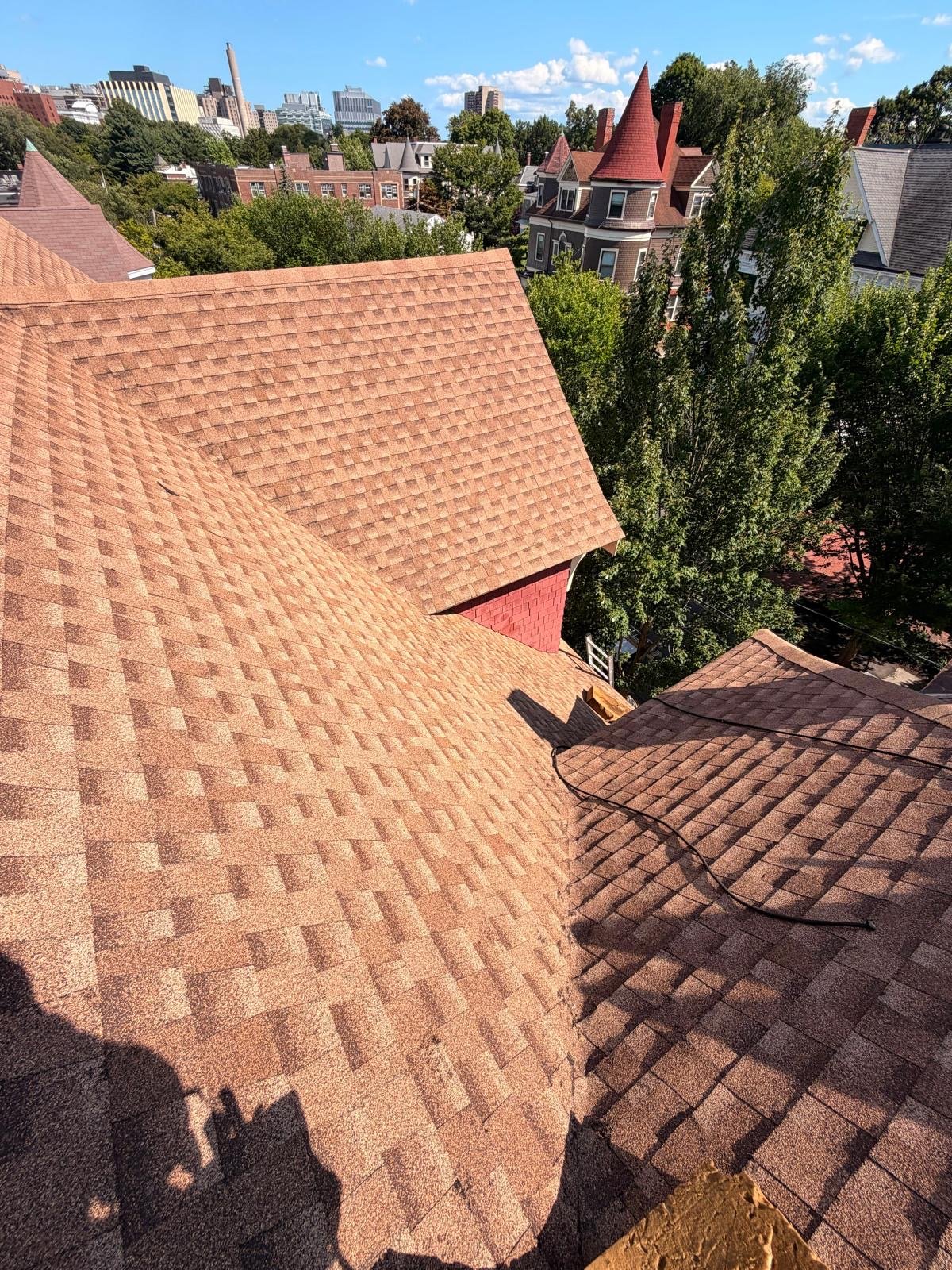
 Leak Diagnosis