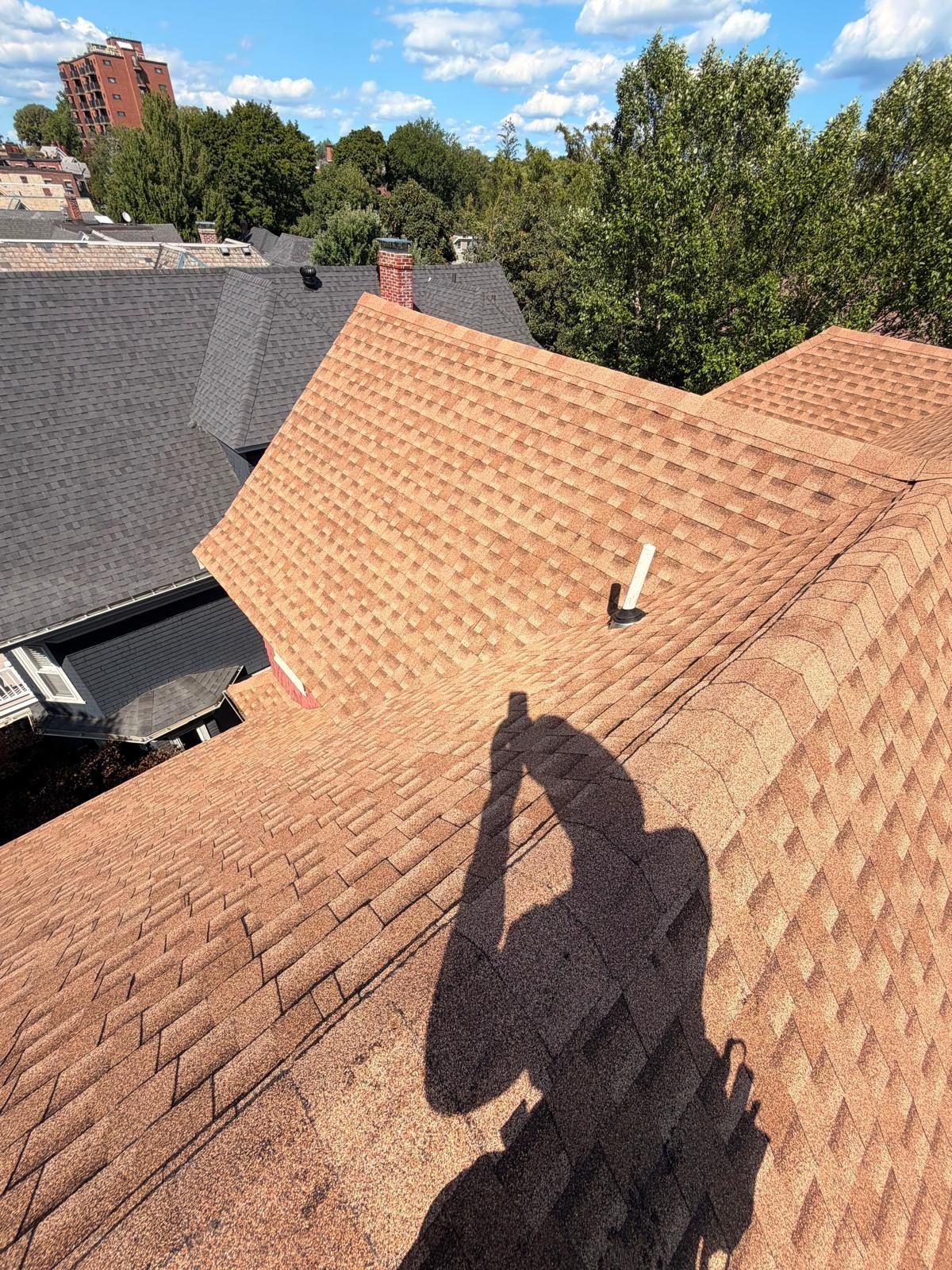
The housing stock here tells the story directly. Most of Shrewsbury's single-family homes were built between the late 1970s and the 1990s. Original galvanized steel step flashing from that era is now 30 to 40 years old, well past the point where corrosion sets in and old sealant turns brittle and cracks. The pre-1940s homes that still make up a portion of town inventory often have flashing details that were never updated at all. When that metal fails, water enters at the chimney, the valley, or the vent pipe and works its way into the wall or ceiling below before the homeowner sees a stain.
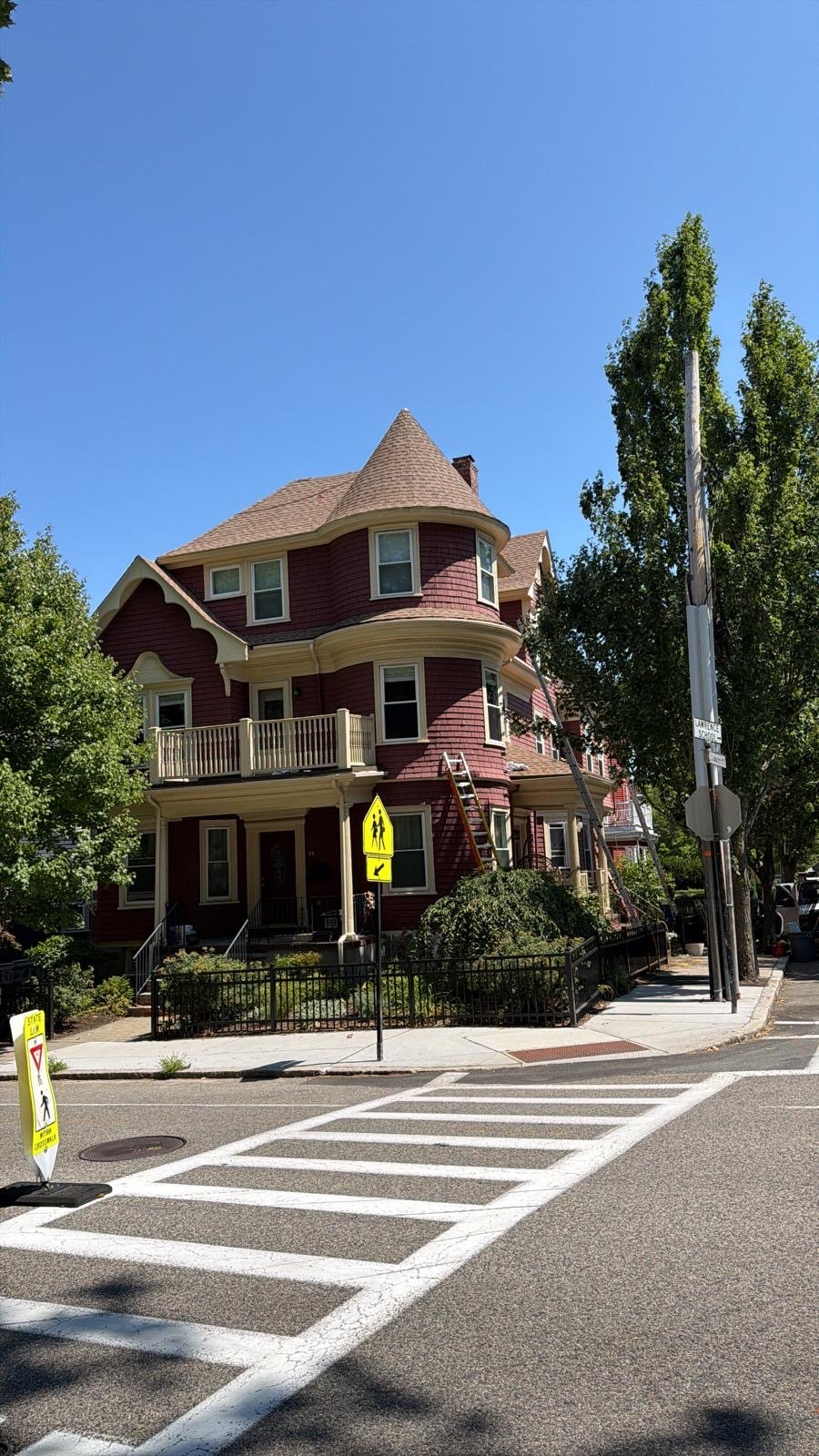
Homeowners across Shrewsbury's Colonial Revivals, capes, and raised ranches call us most often after a ceiling stain appears following a hard rain or a freeze-thaw cycle. The entry point is nearly always a compromised flashing, a lifted counter-flashing at a chimney, corroded valley metal, or a cracked pipe boot, but the actual leak path is confirmed only after an attic and roof inspection. A licensed contractor who traces the failure before removing material, pulls required permits under 780 CMR, and installs flashing lapped and fastened to code is not a commodity. That is the work.
The Scope of the Work
Chimney flashing repair, step flashing and counter-flashing, valley flashing, pipe and vent boot replacement, skylight flashing, wall flashing, kickout flashing, ice and water shield underlayment, sealant and mortar work, and re-shingling of disturbed areas.


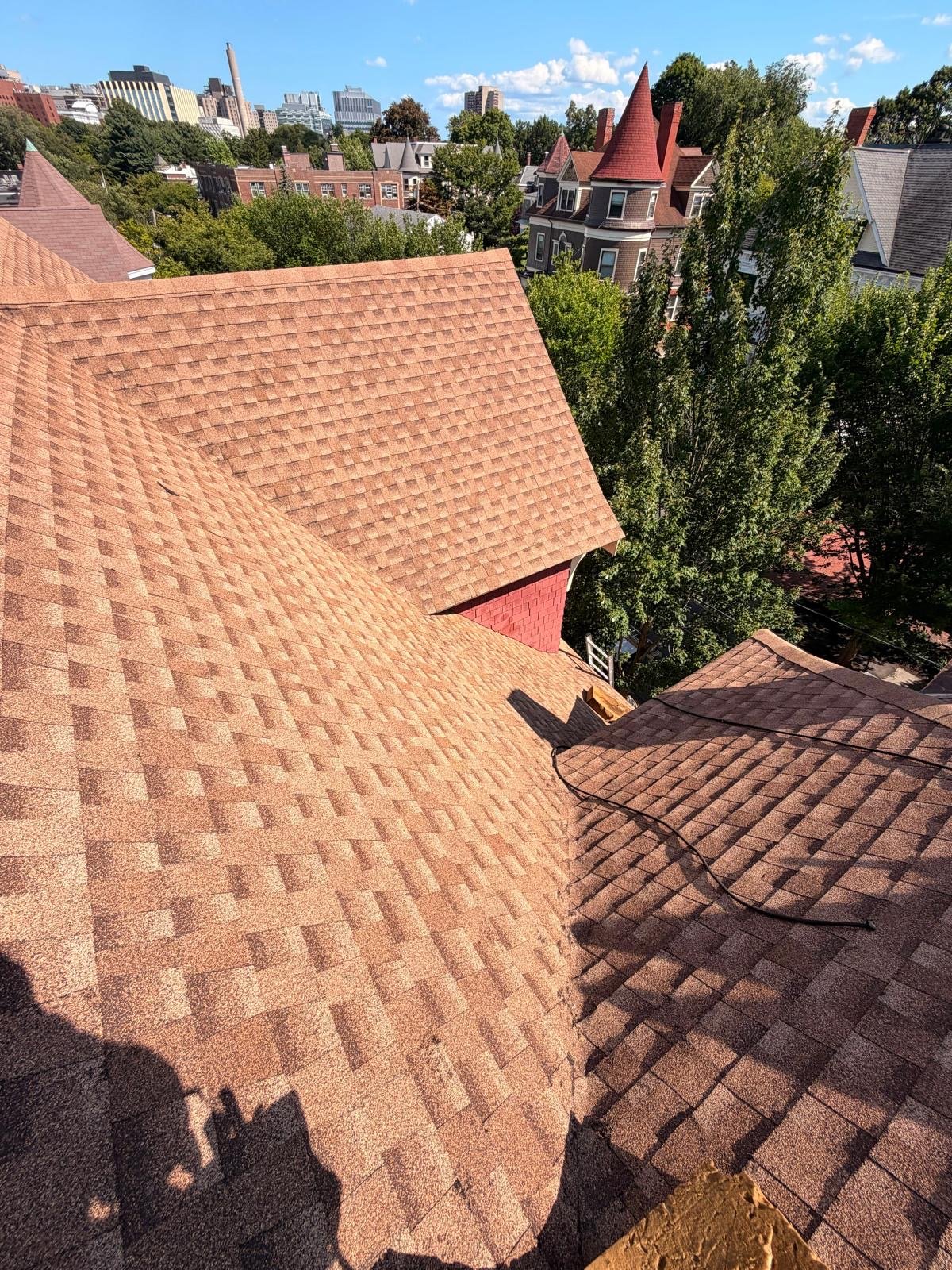
 Chimney Flashing