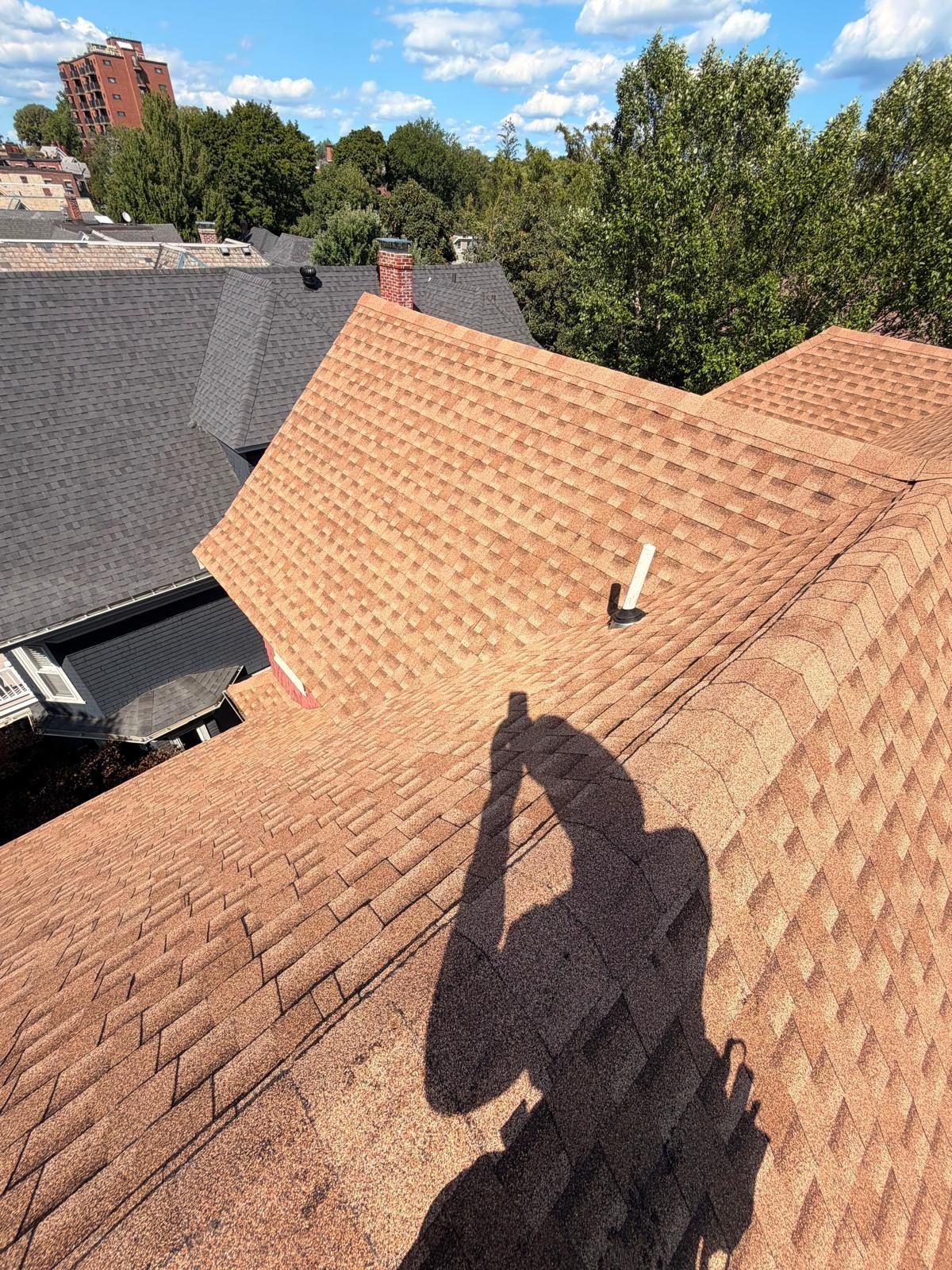
A standard cedar shake installation includes tear-off of one existing roofing layer, disposal, new breathable underlayment and ice-and-water shield at eaves, valleys, and penetrations, the cedar shakes, ridge and hip caps, standard flashing, fasteners, and basic site cleanup. Structural surprises hide under old roofing, and on Shrewsbury's 1970s and 1980s homes the deck condition is often unknown until tear-off is complete. That is why we name what is not included up front: multi-layer tear-off, structural deck repair, skip-sheathing conversion, fire-retardant treatment upgrades, copper flashing upgrades, gutter replacement, and skylight or chimney rebuilding are all scoped and priced separately.
Ice-and-water shield runs at the eaves, valleys, and around every penetration, sealing around nails and blocking water that backs up under shakes. That eave protection matters here specifically. Central Massachusetts averages roughly 64 inches of snow a year, and meltwater refreezing at cold eaves is exactly what drives water back up a wood roof. Homeowners on Shrewsbury's center-entrance Colonials, ranches, and Cape Cods call us for new installations, tear-off and re-roofs, spot repairs, and full cedar shake restoration. The entry point is often a failing flashing or post-storm damage, but the scope is almost always broader once we inspect the deck and attic together.
The Scope of the Work
Cedar shake installation, tear-off and re-roof, spot repair, shake restoration, underlayment, ice-and-water shield, flashing, ridge and hip caps, deck repair, ventilation, and fire-retardant treatment where required by local code.


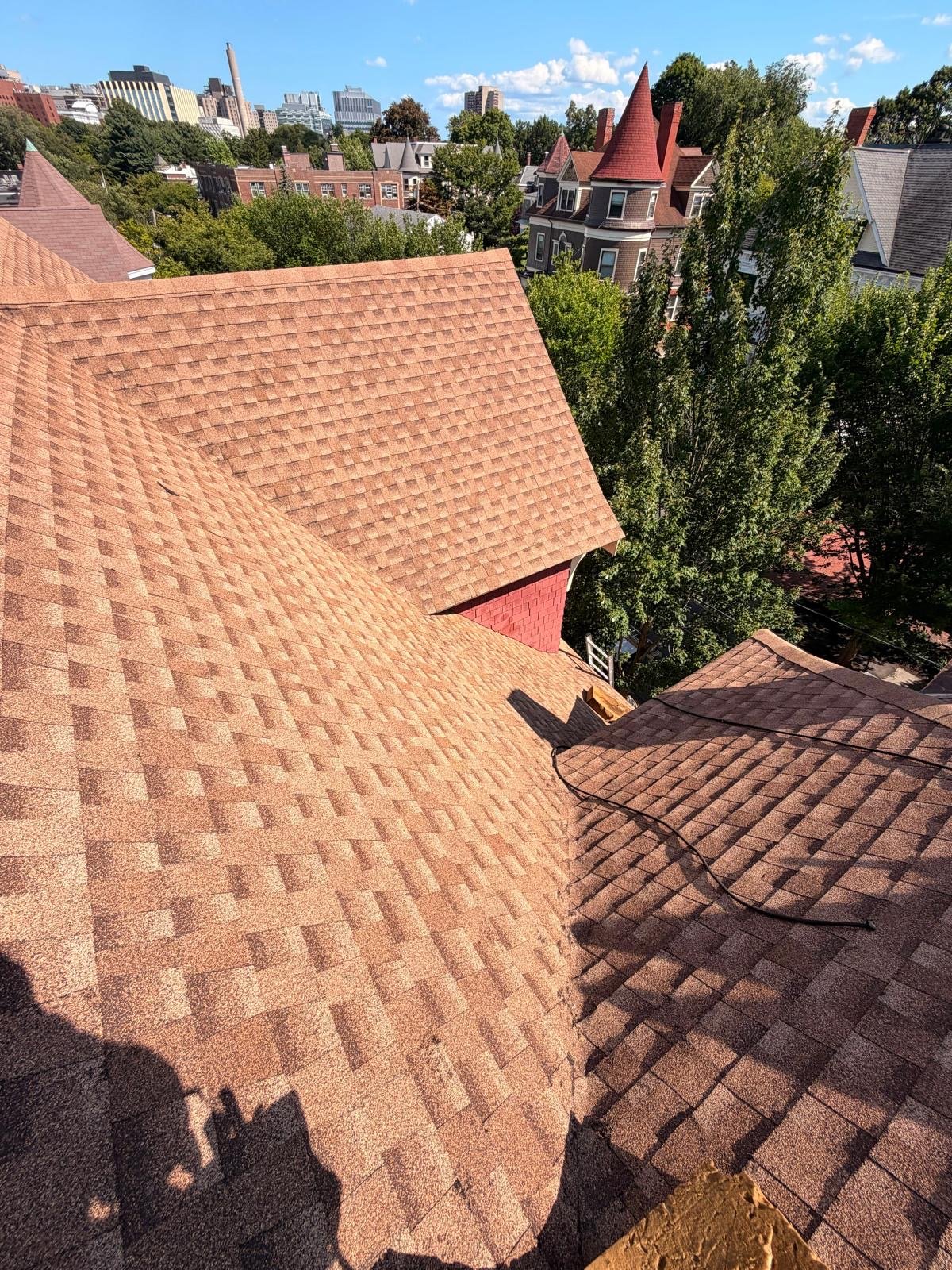
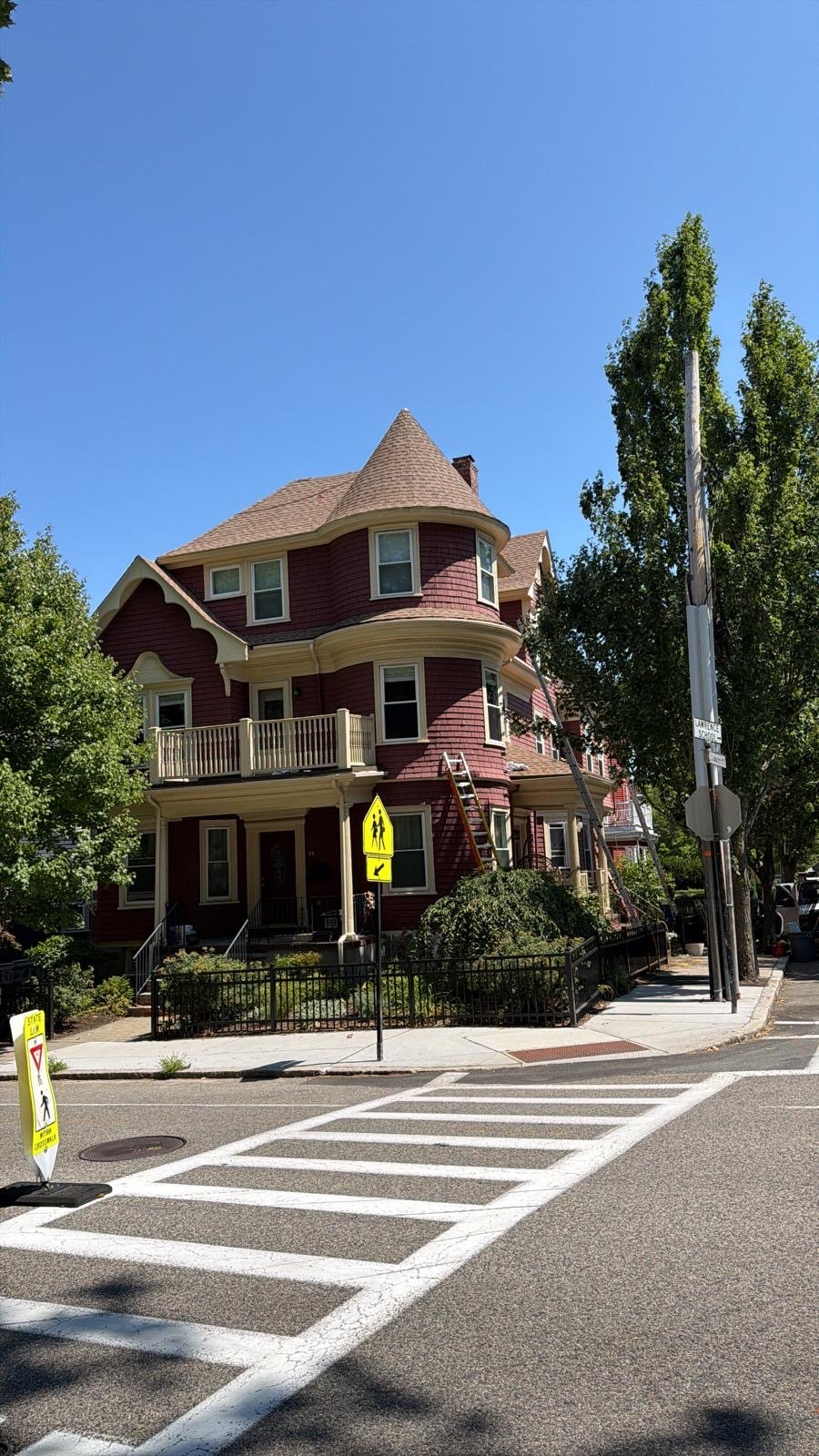 Full System Installation